


Modern agricultural production is undergoing profound transformations driven by a range of internal and external factors. Among the key challenges in recent years are economic instability, climate change, logistical constraints, volatile sales markets, shortages of fertilizers and protection agents, as well as rising production costs. All these factors necessitate that agricultural enterprises rethink their traditional management model.
New Challenges — New Approaches
Many agrarians still adhere to a unified approach, where decisions regarding technologies, investments, or crops are made at the enterprise level. However, this approach, based on “average” indicators and the experience of past seasons, is losing effectiveness in the face of growing risks and high competition.
The approach of “all fields – one strategy” is being replaced by a new management logic centered on the economic efficiency of each individual field. This concept involves viewing a field as a separate business unit or investment project with its own resources, potential, risks, and economic feasibility.
Managing an agricultural enterprise based on portfolio management principles allows for analyzing and planning the profitability of individual fields, adapting technologies to specific conditions, and efficiently allocating resources and investments. This approach not only ensures flexibility in decision-making but also helps minimize financial risks, which is particularly important in an unstable market environment.
Therefore, strategic management at the field level, based on agricultural audit, economic modeling, and ROI (Return on Investment) assessment, is becoming not just an alternative but a necessity for the modern agricultural producer striving for sustainable development and financial stability.
The Field as a Business Unit: The Foundation of a New Model
One of the most significant shifts in modern agricultural management is the transition from a unified to an individualized approach to field management. This means abandoning the view of all fields as identical production units and instead positioning each field as an independent investment object. In such a model, agricultural production is no longer perceived as a contiguous area with a general budget, but rather as a portfolio of assets, where each plot has its own profitability, risks, payback period, and resource requirements.
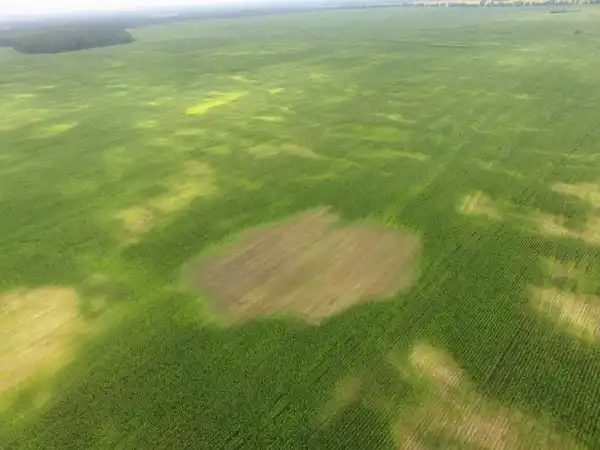
Microeconomics of Agribusiness: Analysis from the Field Level
This approach implies that decisions regarding crop selection, intensification level, investment volume, equipment use, or agrochemicals are made at the specific field level, based on its agronomic potential, historical data, and market conditions. For example, if one plot has a high humus content, good soil structure, and favorable logistics, it can yield a high harvest with intensive technologies, ensuring a high ROI. Another, with low agrochemical potential, may not justify additional costs, and it would be more advisable to apply a basic technology or even temporarily remove it from cultivation.
The advantages of such a management model are evident:
- Technology Differentiation. Each field receives an optimal agrotechnical scheme tailored to its conditions and potential. This reduces resource overspending and minimizes the risk of yield shortfalls.
- Reduction of Financial Risks. Investments are directed where they yield the highest return. This helps avoid investments in inefficient or unprofitable plots.
- Maximization of ROI. Precise resource management enhances cost efficiency, directly impacting increased business profitability.
- Rational Resource Allocation. Human, technical, and material resources are no longer allocated “per hectare” but are used considering the economic feasibility of each investment.
Furthermore, the individualized approach to fields opens up opportunities for long-term financial planning, attracting investments for specific plots, and developing precise analytical models for profitability. In the long run, this enables agricultural enterprises to transition to intelligent production management, where all decisions are made based on data, forecasts, and digital modeling.
Thus, the concept of “the field as a business unit” forms the foundation of a new agricultural production model—flexible, economically sound, and risk-resistant.
Case Study: How Technology Differentiation Enhances Profitability
The practical implementation of the individual approach to field management demonstrates significant economic benefits for agricultural enterprises. One illustrative example is a case study from a farm that introduced technology differentiation based on the agropotential of its fields.
As part of the experiment, an agricultural audit was conducted to assess soil fertility, historical yields, and agrochemical indicators for each plot. Based on the analysis, the fields were classified into two categories:
- High-yielding fields with high yield potential;
- Medium-fertility fields where potential was limited by natural or man-made factors.
A separate technological strategy was applied for each group:
- High-yielding fields were managed using an intensive scheme, which included the application of high-quality mineral fertilizers, modern fungicides, microelements, and a comprehensive crop protection system. Precision equipment was also used for seeding rates and resource application.
-
Medium-fertility fields received only a basic level of agrotechnical service: a standard fertilizer package, limited application of plant protection products, and minimal tillage without additional agronomic interventions.

Each Field as a Business
The analysis of the results showed that on fertile fields, additional investments in intensive technologies provided a significant yield increase of about 20%, which in turn boosted overall profit by 25% (Table 1). A high ROI (over 100%) indicates that every hryvnia invested yielded substantial financial returns.
Table 1. Comparative Analysis of Agrotechnological Efficiency by Field Fertility Level
|
Indicator |
Fertile Fields |
Medium-Fertility Fields |
|
Applied Technologies |
Intensive Agrotechnology |
Standard (Basic) Agrotechnology |
|
Yield Increase |
+ 20 % |
+ 8 % |
|
ROI |
High |
Low |
|
Economic Feasibility |
Investments fully justified themselves |
Costs did not pay off |
|
Profit Change |
+25% |
No change or even a decrease |
Meanwhile, on medium-fertility fields, even a slight intensification of technologies did not ensure economic efficiency. The yield increase (8%) was insufficient to cover additional costs, resulting in a low or negative ROI. Consequently, such fields showed either zero or negative profitability changes.
The key takeaway from this case study is that the same agrotechnologies do not yield the same economic effect on fields with different potentials. Investment must be targeted, and the feasibility of technologies should be assessed not from the perspective of “field area” but from the perspective of expected economic return. This approach forms the basis for economically sound resource allocation, reduces the risks of overspending, and allows the enterprise to focus on those areas where investments truly contribute to profit.
The ROI Model in Agricultural Production: How to Assess Investment Effectiveness on a Field
In modern agribusiness, the economic feasibility of investments has become a key criterion for evaluating production decisions. One of the most illustrative and accessible tools for its assessment is the ROI (Return on Investment) metric.
The ROI formula in agriculture is: ROI = ((Revenue – Costs) ÷ Costs) × 100%. This formula allows for a quick assessment of how profitable it is to invest resources in a specific agrotechnology or production area. ROI is expressed as a percentage and indicates how much net profit each invested hryvnia generates.
For a clear understanding of the ROI calculation principle, let’s consider a hypothetical situation:
- Land cost – 100,000 UAH/ha (considered a long-term asset and not included in short-term ROI, but important for overall payback assessment);
- Agrotechnology costs (including fertilizers, plant protection products, soil tillage, etc.) – 20,000 UAH/ha;
- Projected gross revenue – 50,000 UAH/ha.
Applying the formula: ROI = (50,000 – 20,000) / 20,000 × 100% = 150%. Thus, the ROI is 150%, meaning each invested hryvnia yields 1.5 hryvnias of net profit. This indicates high economic efficiency for agrotechnologies applied to fertile or well-managed plots.
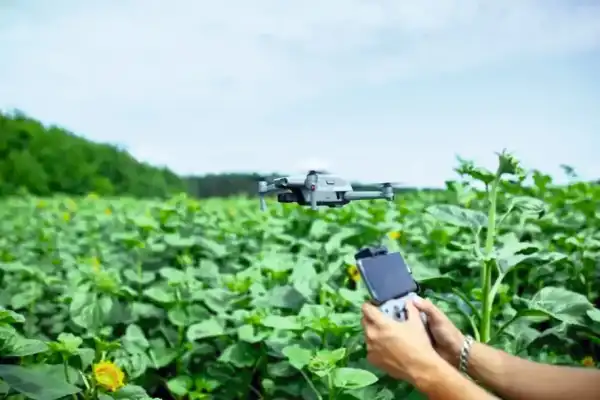
Planning Based on ROI is a Step Towards Financially Stable Agricultural Production
In fact, with such an ROI, investments pay off in less than two years, which is an exceptionally positive outcome in agriculture, where financial returns are usually spread over time due to production seasonality, weather risks, and sales delays. This example clearly demonstrates that the right technology, applied to a field with high potential, not only yields an agronomic effect (yield) but also provides financial stability and increased enterprise profitability (Table 2).
Table 2. ROI for Different Field Types
|
Field Type |
Costs (UAH/ha) |
Revenue (UAH/ha) |
ROI |
Comment |
|
Highly Productive |
20,000 |
50,000 |
150% |
High efficiency, quick payback |
|
Medium |
20,000 |
35,000 |
75% |
Moderate payback, acceptable return |
|
Low Productivity |
20,000 |
22,000 |
10% |
Barely profitable, potentially loss-making |
The calculations show that identical costs (20,000 UAH/ha) for agrotechnologies yield completely different economic results depending on the field’s potential. The highest ROI is achieved by fields with high agropotential—they are the ones most responsive to intensification, generating stable and predictable financial returns.
On low-productivity plots, even a slight increase in yield does not cover the costs. In such cases, the strategy of investing in intensive technologies is not economically feasible. It may only be justified within a long-term soil restoration program, not for immediate profit.
Medium fields provide an acceptable ROI level (75%), but even here, the question of optimizing technologies arises—perhaps some resources could be saved without losing yield. Conclusions from the ROI model:
ROI is not just a number; it is a decision-making tool. It allows for assessing the economic feasibility of every agricultural intervention;
Investments must be targeted. The highest efficiency is achieved when technologies match the potential of a specific field;
Low ROI signals the need for change. This could involve changing the crop, technology, or even removing the plot from cultivation;
Planning based on ROI is a step towards financially stable agricultural production.
Agricultural Audit as a Tool for Strategic Planning
One of the key elements of a modern agricultural management model is the agricultural audit—a comprehensive diagnosis of production plots that allows not only for assessing the current state of resources but also for building an economically sound development strategy for the enterprise. An agricultural audit serves as the starting point for transitioning to portfolio management, as it provides complete information on the potential, risks, and investment feasibility for each field.
Such an audit covers a wide range of indicators:
- historical yields (dynamics across seasons),
- soil characteristics (humus, pH, structure, moisture content),
- risks (erosion, waterlogging, weather threats),
- economic profitability (actual profits, costs per hectare),
- logistical factors (distance, equipment accessibility, storage capacity).
Based on the collected data, an investment model for each plot is formed, which allows for:
- identifying fields that require intensification (capable of generating more with investments in fertilizers, plant protection products, tillage);
- identifying those where costs should be minimized or temporarily removed from cultivation (due to low potential or high risks);
- revising technologies or changing crops, adapting them to soil and economic conditions.
To illustrate the effect of an agricultural audit, let’s consider a comparative table.
Table 3. Before/After Agricultural Audit
|
Indicator |
Before Agricultural Audit |
After Agricultural Audit |
|
Management Approach |
Unified strategy for all fields |
Individual strategy based on each field’s potential |
|
Investments |
Uniform distribution |
Differentiated based on agropotential |
|
ROI |
Not considered |
Calculated for each plot |
|
Decision Making |
Intuitive, based on experience |
Analytical, based on agricultural audit and economic modeling |
|
Profitability of Weak Fields |
Often unprofitable |
Optimized or costs reduced to a minimum |
Thus, an agricultural audit transforms the approach to agricultural production—from intuitive and general to targeted, rational, and adaptive. It enables agricultural enterprises to make decisions not “by eye” but based on reliable data and predictive models. As a result, the enterprise gains an economically managed field map, which becomes the basis for:
- building an effective crop rotation;
- budgeting;
- planning operational activities;
- strategic development for 3-5 years.
In other words, an agricultural audit transforms a field from a simple production unit into a management object with predictable financial results.

Agricultural Audit Transforms a Field from a Simple Production Unit into a Management Object with Predictable Financial Results
Advantages of Portfolio Management in Agriculture
Implementing a portfolio approach in agricultural production management opens up new opportunities for enterprises to optimize resources, reduce risks, and enhance financial stability. Unlike the traditional model, where all fields are treated as a single block, portfolio management involves assessing and planning for each plot individually, as an independent asset with its own potential and risk level.
Among the main advantages of this approach, the following should be highlighted:
1. Balancing Profitable and Risky Plots. By classifying fields based on their profitability level, the enterprise can efficiently allocate resources: increase investments in the most profitable fields while simultaneously reducing costs on plots with higher risk levels or low potential. This helps avoid overspending and stabilizes overall economic indicators.
2. Reduction of Overall Production Risk. Portfolio-level management avoids relying solely on one group of fields or crops. The diversity of agrotechnologies, crops, and agro-climatic conditions reduces dependence on weather, market, or technical factors in specific areas. Thus, risks are diversified, making the enterprise more resilient to external fluctuations.
3. Scenario-Based Financial Planning Capability. The collected data on the profitability of each field allows for modeling various production scenarios: optimistic, pessimistic, and baseline. This is particularly important for agricultural producers planning budgets, loans, investments, or crop changes for several seasons ahead.
Ultimately, portfolio management transforms agricultural production from a reactive process into a proactive strategy, where decisions are made not intuitively but based on systematic analysis, planning, and forecasting.
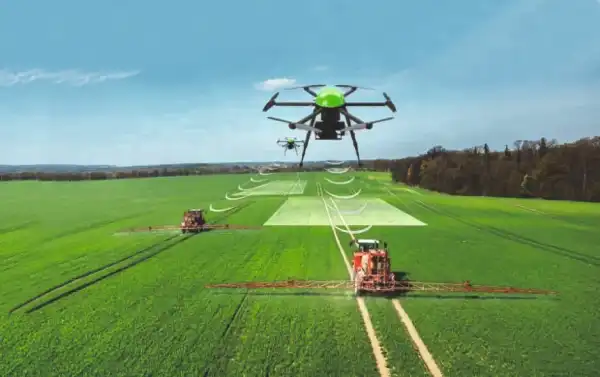
The Future of Agriculture is Not Just About Equipment and Technology, But Primarily About Managing Data, Resources, and Profitability on Every Hectare
Conclusions and Recommendations
In today’s agribusiness environment, where the efficiency of every investment is crucial, transitioning to a portfolio approach in field management is not just an advantage but a necessity. Viewing each field as a separate investment unit enables agricultural enterprises to utilize resources most effectively, optimizing their allocation according to the potential, risks, and profitability of each plot.
The key tool for this transformation is the agricultural audit, which ensures a systematic approach to assessing production resources and making economically sound decisions. It is thanks to the agricultural audit that it becomes possible to move from intuitive management to digital analytics and financial planning at the hectare level.
Implementing differentiated agrotechnologies is another critical component of the new management logic. Abandoning “averaged” technological schemes in favor of individual strategies for different types of fields allows for a significant increase in the return on investment (ROI) level.
In conclusion, an effective agricultural production strategy should be based not only on agronomic indicators but primarily on the economics of each field. An agricultural enterprise must plan not only for yield but also for profit, doing so based on precise calculations, forecasting, and a strategic model. The future of agriculture is not just about equipment and technology, but primarily about managing data, resources, and profitability on every hectare.
Thus, we can summarize:
Serhiy Khablak, Doctor of Biological Sciences, Agronomy Expert, Institute of Food Biotechnology and Genomics