

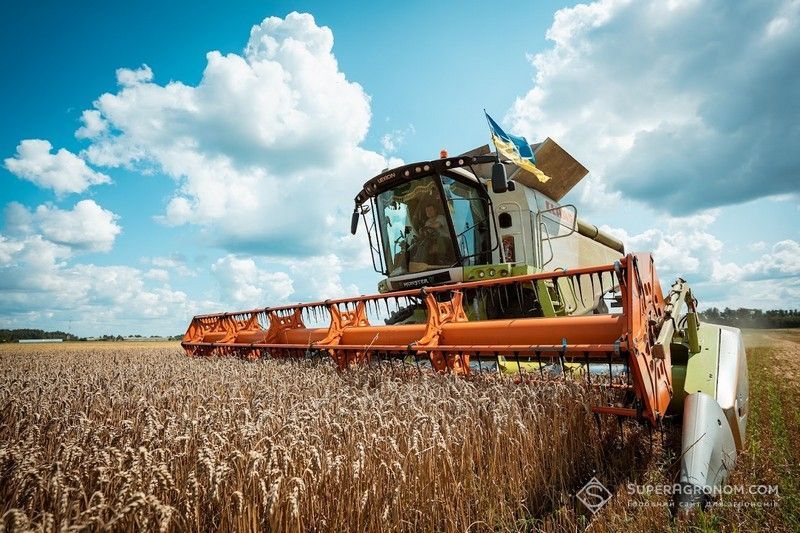
Photo: SuperAgronom.com Harvest
Ukrainian agrarians have harvested 5.47 million tons of grain and leguminous crops of the new harvest from 1.34 million hectares, or 11% of the projected areas. The largest volumes were obtained by farms in Odesa, Mykolaiv, and Dnipropetrovsk regions. In several regions, the harvest began earlier due to an early spring, accelerated vegetation, drought, and high temperatures.
This is reported by Kommersant Ukrainian.
The initial yield results generally remain favorable. Individual farms are harvesting rapeseed with a yield of about 3.5 tons/ha, winter barley — 4.5 tons/ha, and wheat yields could be 5–7 tons/ha. At the same time, spring frosts, heat, and lack of moisture have already worsened results in some farms, and further indicators will depend on the weather.
Farmers cite the sharp increase in the cost of fuel, fertilizers, and other resources as the main problems. Some farms have to buy diesel on credit at a price of about 87 UAH/liter, while in spring its cost reached up to 115 UAH/liter in some places. The situation is complicated by the shortage of machine operators, mobilization of workers, and the need to rent equipment at increased prices.
The most significant concern is the Russian attacks on Odesa ports and foreign vessels, which have effectively halted maritime exports. Logistics problems are already putting pressure on domestic purchase prices. According to agrarians, wheat has decreased in price from 10.7 thousand UAH/ton last autumn to about 8.7 thousand UAH/ton, and in some regions, food grain is being offered for purchase at 5 thousand UAH/ton.
Prices for rapeseed at some processing plants have decreased from 26.5 thousand to 23 thousand UAH/ton within a week, while queues are forming near the plants. According to analysts, farmers are losing about $70 on each ton of rapeseed. Because of this, producers will likely sell only the minimum volumes necessary to repay loans and finance ongoing operations.
The Ministry of Agrarian Policy is discussing the expansion of state support, insurance instruments, and compensation for losses, as well as the procurement of polymer sleeves for temporary grain storage. If exports through the ports can be resumed within one to two months, a systemic crisis can be avoided. However, a prolonged halt in maritime logistics threatens a deficit of storage capacity and the sale of the harvest at prices close to the cost of production.

Agribusiness of Ukraine 2024/2025
Infographic Guide
Download
Olena Basanets, SuperAgronom.com
Be the first to know the latest agronomic news from Ukraine on our Facebook page, Telegram, and subscribe to SuperAgronom’s Instagram.