

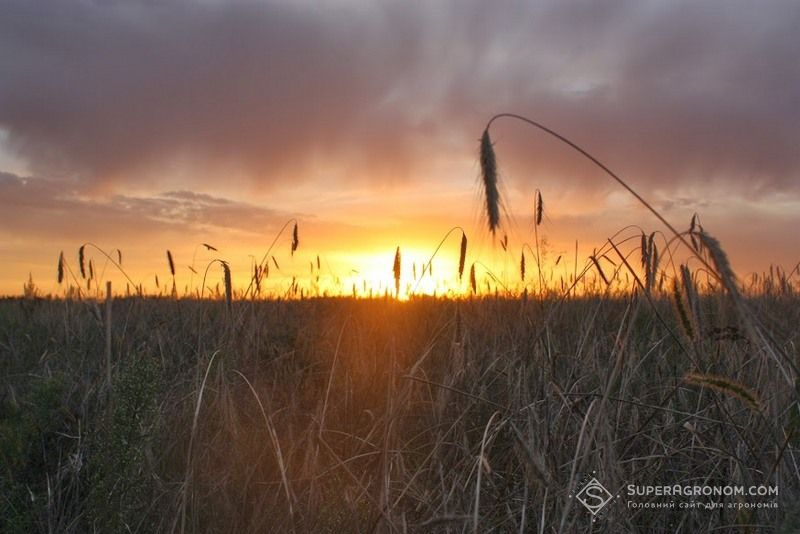
Photo: SuperAgronom.com
In Poland, the yield of early grains this year has been lower than last year. Due to the dry spring, spring frosts, and June heatwave, farmers are harvesting 5–7 t/ha of wheat instead of the usual 9–10 t/ha, and rains are further delaying the harvest.
This is reported by Farmer.pl.
In the eastern part of the Greater Poland Voivodeship, the first combine harvesters only went into the fields two weeks ago, but the rains interrupted the harvest. After recent rainfall, signs of blackening have begun to appear on grain crops. The yield indicators are also not encouraging. Winter barley and triticale are being harvested with yields ranging from 3 to 5.5-6 t/ha.
In the Lublin Voivodeship, a week of drought and heat at the end of June significantly reduced the yield potential. Currently, wheat and rapeseed are being harvested.
“We have mostly finished the small harvest. Winter barley has been harvested. Now the first rapeseed and wheat are being harvested. Farmers are mostly harvesting wheat from very light soils or from heavy rendzinas. These are the plantations that ripened fastest after the heatwave at the end of June. Unfortunately, the yields are not high. In the case of wheat, we are currently talking about 5-6 tons/ha. The grain quality is good so far, but this year’s yield is not impressive,” says Marcin Gryń, a farmer from the Zamość region.
As he emphasizes, the main reason for the weaker results was the exceptionally dry spring, which affected almost the entire region. In many places, from the beginning of spring until harvest, about 100 mm of precipitation fell, of which 40 mm came from snow cover and 60 mm from atmospheric precipitation, and in some places even less.
If farmers previously harvested 9-10 t/ha, this season they are typically achieving 6-7 t/ha.
Prolonged rains are delaying the harvest in the Warmian-Masurian region. Since Friday, approximately 70 mm of precipitation has fallen in the Pasłęk area, and in some areas around Elbląg, up to 150 mm. In the gmina of Markusy, some fields are already flooded, and local water is stagnant.
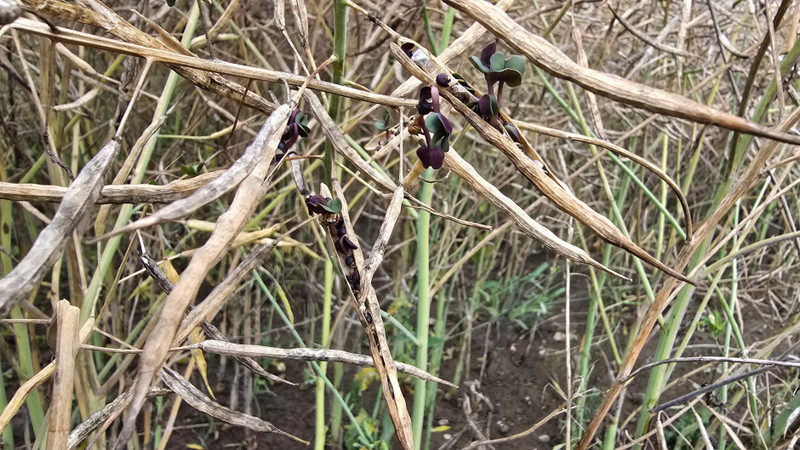
A similar situation is observed in the Kuyavian-Pomeranian and Łódź Voivodeships, where farmers are sometimes observing the germination of rapeseed seeds in pods. The constant humid weather can intensify this phenomenon, reducing the quality of the raw material and increasing pre-harvest losses.
Polish agriculturists note that this season’s biggest challenge has been not only the delayed harvest due to rains but also a significant decrease in yields after a dry spring, frosts, and the June heatwave. At the same time, even with the harvest obtained, farmers complain about the low profitability of production due to high costs and unfavorable purchasing prices for grain.
The situation of extreme drought has affected many EU countries. According to Coceral, the total grain production in the European Union this year may decrease by more than 9% (almost 23.4 million tons). It is expected that due to premature grain ripening from heat, the gross harvest of winter wheat in Germany will fall by 12%, in Poland – by 20%, and in France – by 8%.
Melania Nesmatsna, SuperAgronom.com

We are on Telegram
Stay up-to-date with important agronomic news and events
Be the first to learn the latest agronomic news from Ukraine on our Facebook page, Telegram, and subscribe to SuperAgronom’s Instagram.