

Photo: superagronom.com
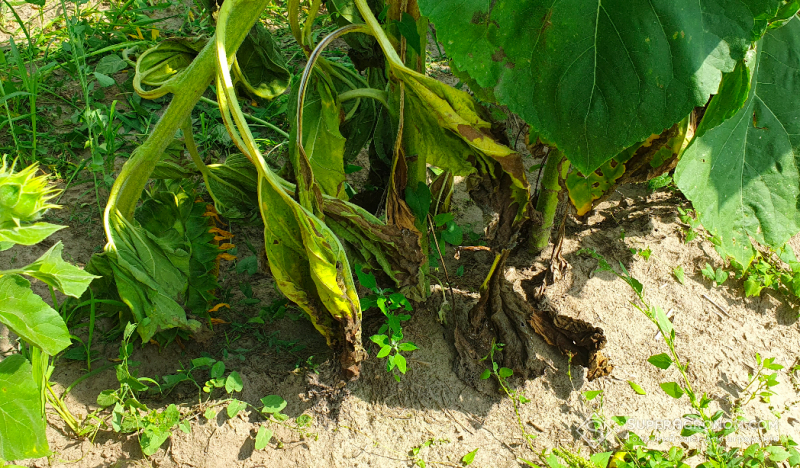
Sclerotinia is a dangerous disease that can cause significant losses in sunflower and soybean yields. It is found in virtually all cultivation regions without exception, and therefore, under the current season’s hydrothermal conditions, it demands increased attention from farmers nationwide.
The disease manifests at various stages of plant development, but can inflict the most damage during flowering, specialists from Ukravit emphasize. Therefore, to control it, selecting the appropriate active ingredient and ensuring timely protection are crucial.
“Everyone who cultivates sunflowers and soybeans has encountered sclerotinia. In addition to quantitative yield losses, the disease causes the formation of low-quality sunflower seeds, reduces oil content, and contributes to an increased acid number of the oil, rendering it unfit for consumption. Soybean seeds also develop underdeveloped, with shriveled seeds, reduced protein content, and poor germination qualities. Thus, to safeguard against losses, action must be comprehensive. Firstly, adhere to crop rotation and reduce the frequency of sowing crops susceptible to the disease. Secondly, choose hybrids and varieties tolerant to the pathogen. Fields that are overcrowded and weed-infested are at heightened risk, creating favorable conditions for the pathogen. During the growing season, disease control must be ensured with appropriate active ingredients. For this purpose, preventive spraying of crops with boscalid-based fungicides at the onset of flowering is necessary,” notes Volodymyr Konohrai, Product Manager for the “Fungicides” division at Ukravit.
To manage sclerotinia and other diseases affecting sunflowers and soybeans, Volodymyr recommends the SDHI-containing fungicide Rialt (pyraclostrobin, 300 g/l + boscalid, 200 g/l). Boscalid has a localized systemic action with preventive and curative properties. After spraying, a portion of the active ingredient remains on the plant surface, while the rest penetrates inside, spreading translaminarly and acropetally through the xylem.

Ukravit
The largest Ukrainian producer of plant protection products and microfertilizers
This active ingredient is a succinate dehydrogenase inhibitor (SDHI) in the mitochondrial electron transport chain, where it blocks a key stage of cellular respiration, consequently disrupting pathogen energy supply. It inhibits spore germination, germ tube growth, and blocks appressorium formation. Pyraclostrobin, on the other hand, is an active ingredient with translaminar properties, offering protective and curative benefits. It obstructs electron transport in the mitochondrial respiratory chain, leading to the inhibition of pathogen respiration and its ability to produce energy, thereby preventing spore germination and germ tube growth.
Rialt possesses curative and preventive properties, ensuring a prolonged period of protective action. Thanks to its pronounced physiological effect under favorable hydrothermal conditions, it extends crop vegetation. The fungicide has a positive track record of application via multicopters.
Furthermore, this year the company has registered a new product – the fungicide Vinat (boscalid, 500 g/l), aimed at controlling sclerotinia and other diseases in sunflowers, soybeans, and rapeseed.
Be the first to learn about the latest agricultural news from Ukraine on our Facebook page, Telegram, and subscribe to SuperAgronom’s Instagram.